Summer Rucking: How Heat Changes the Math on Weight, Pace, and Water
Quick Answer: Heat changes rucking more than it changes running: the pack adds metabolic load AND blocks your back’s sweat evaporation — a double heat tax. Summer adjustments: drop ruck weight 25-30%, shift to dawn or evening, slow your pace before your body forces it, drink to a schedule (not thirst) with electrolytes on hour-plus rucks, and know the stop-now signs: goosebumps in heat, confusion, or when you stop sweating. The ego that keeps summer weight at winter levels is the one that meets the medical tent.
Rucking’s charm is its all-weather simplicity — until July, when the same 3-mile loop with the same 30 pounds starts producing finishing times, heart rates, and faces that alarm people. Nothing broke: the heat just added an invisible second backpack.

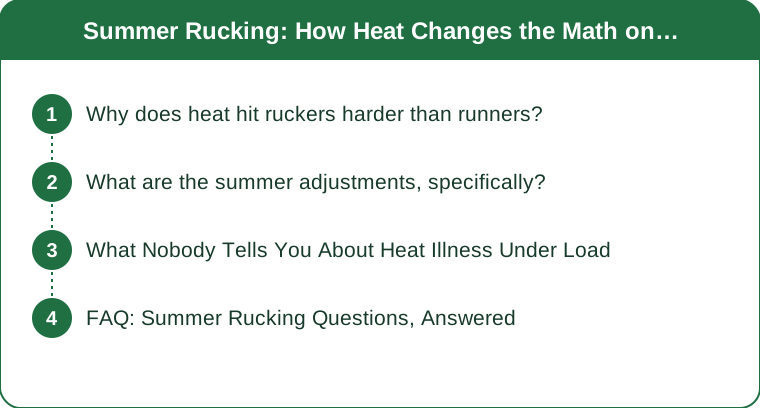
Why does heat hit ruckers harder than runners?
The double tax:
- Tax one — more heat produced: carrying load raises metabolic work at any pace — you’re generating meaningfully more internal heat than an unloaded walker at the same speed. More watts, more heat to dispose of.
- Tax two — less heat disposed: your back is a major sweat-evaporation surface, and the pack seals it under foam and fabric. The body’s cooling system loses one of its biggest radiators exactly when output rises.
Add the standard heat-stress physics — cardiovascular strain climbs as blood is shared between muscles and skin-cooling, sweat losses accelerate, and humid air slows evaporation further — and the same ruck that scored ‘moderate workout’ in spring scores ‘heat event’ in August.
The practical meaning: summer rucking isn’t spring rucking done sweatier — it’s a different dosage problem requiring deliberate downshifts, the same way altitude changes a climb.
What are the summer adjustments, specifically?
Weight: drop 25-30%. The 30lb winter ruck becomes 20-22lb in real heat — the training stimulus stays (heat itself is stimulus), while the heat production drops toward manageable. Ego note: the loaded vest crowd calls this ‘deloading’; physiology calls it ‘arithmetic.’
Timing: own the edges of the day. Dawn rucks buy the day’s coolest 2 hours plus shade-length bonus; evening works with a sun-angle check. The noon summer ruck is the one that generates the cautionary stories.
Pace: slow on purpose, early. Cut your usual pace 10-15% from the first mile — waiting until you feel the need means the core temperature already voted. Heart rate drift is the honest gauge: the same effort reading 15-20 beats higher than usual is the heat surcharge displayed in real time.
Hydration: schedule, not thirst. Thirst lags need in heat — drink every 15-20 minutes (a few good swallows), pre-hydrate before leaving, and hour-plus rucks earn electrolytes (sweat is salty; replacing water alone on long hot efforts dilutes what’s left). Post-ruck, the classic check: bodyweight before and after — each missing pound is roughly a pint of unreplaced sweat.
Route craft: shade-weighted loops, water stops built in, and shorter circuits near home base beat the heroic out-and-back that puts your hottest, tiredst mile farthest from the car.

What Nobody Tells You About Heat Illness Under Load
The pack changes the warning-sign math too: heat exhaustion under load arrives faster and reads quieter — the general fatigue of rucking masks the early signals runners would notice.
The escalation ladder to memorize:
- Heat cramps and heavy fatigue: the early flag — shade, water, pack off, done for the day.
- Heat exhaustion: heavy sweating with weakness, nausea, headache, dizziness, clammy skin — stop completely, shade, pack off, cool water on skin, sip fluids; improvement should come within 30 minutes, and no improvement = medical help.
- The red-line signs — emergency, not judgment calls: confusion or irritability out of character, stumbling, goosebumps/chills in the heat, hot dry skin where sweat stopped, or collapse. That’s heat stroke territory: emergency services, aggressive cooling, immediately. Under load, the progression from ‘feeling rough’ to danger can be startlingly quick.
The buddy factor earns its keep here: cognitive symptoms (the most dangerous ones) are exactly the symptoms you can’t self-assess — a partner notices your wobble and word-salad before you do. Solo summer ruckers: tell someone the route, carry the phone, and set a hard turnaround time. Heat illness is dramatically easier to prevent than to treat, and every adjustment above is the prevention. This is general information, not medical advice.
FAQ: Summer Rucking Questions, Answered
Can I heat-acclimate and go back to full weight?
Partially — 10-14 days of graduated heat exposure genuinely improves sweat response and tolerance (it’s why week-3 summer feels better than week-1). But acclimation shifts the curve; it doesn’t repeal it — the adjusted weight-and-timing rules still apply on genuinely hot days, just with more headroom.
Wet shirt trick — help or hype?
Help, within limits: pre-wetting your shirt and hat adds evaporative cooling where the pack isn’t blocking it — a real assist in dry heat, less effective in humidity (the air’s already full). It supplements the big levers (weight, timing, pace); it doesn’t replace them.
What about hydration pack vs bottles for summer rucks?
The bladder wins summer decisively: sip-without-stopping supports the every-15-minutes schedule that bottles quietly sabotage (nobody de-packs for a bottle that often). Freeze it half-full the night before and it doubles as back-of-pack cooling for the first hour — the rare comfort trick with zero downside.
TL;DR:
- The pack double-taxes you in heat: more heat produced (load) + less disposed (blocked back evaporation)
- Summer math: -25-30% weight, dawn/evening timing, -10-15% pace from mile one, scheduled drinking + electrolytes past an hour
- Heart-rate drift is the heat surcharge made visible; goosebumps-in-heat, confusion, or dry hot skin = emergency now
- Acclimation buys headroom, not exemption; the buddy system covers the symptoms you can’t self-assess
The ruck didn’t get harder in July — it got heavier, invisibly, and the scale that measures it is your core temperature. This is general information, not medical advice.
Keep Reading
This article is for general informational and styling purposes only. Fit, sizing, and product availability may vary.