Why Loading Your Ruck Too Heavy Too Soon Wrecks Your Knees Before Your Fitness
Rucking looks simple enough that it’s tempting to just load the pack heavy and go, but the joints that absorb that extra weight adapt on a much slower timeline than the motivation does, and starting too heavy tends to show up as knee or lower back pain long before it shows up as fitness gains.

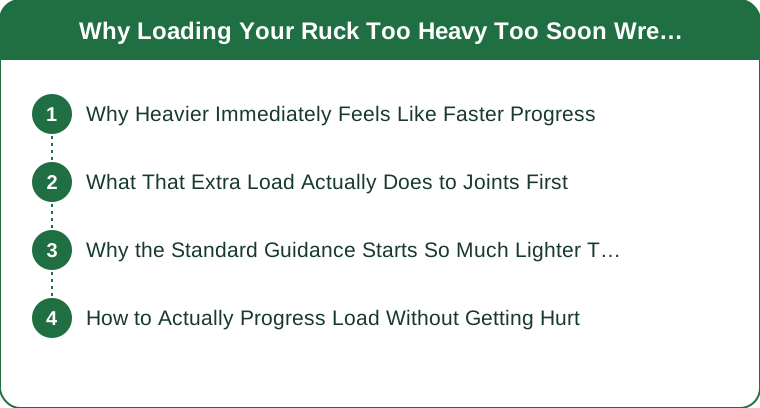
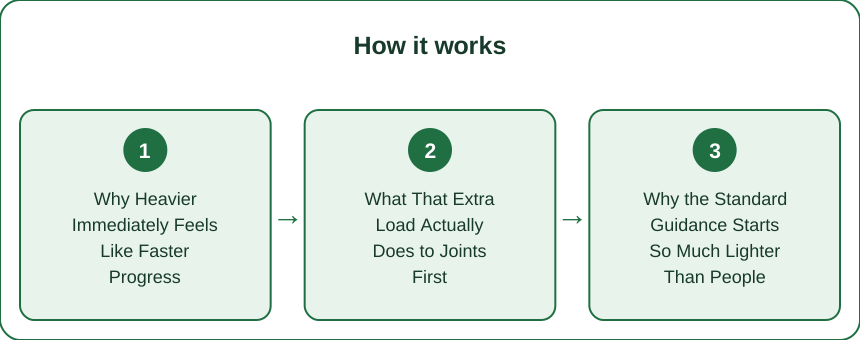
Why Heavier Immediately Feels Like Faster Progress
The appeal: a heavier ruck obviously feeling like a harder, more effective workout right away, which makes loading up fast seem like the obvious way to get results sooner rather than later.
What That Extra Load Actually Does to Joints First
The mismatch: connective tissue, tendons and joint cartilage, adapting to new load far more slowly than muscles do, so knees and lower backs absorb the stress of a heavy pack well before strength and cardiovascular fitness have caught up to support it.

Why the Standard Guidance Starts So Much Lighter Than People Expect
The benchmark: most rucking guidance recommending a starting load around ten percent of bodyweight for the first several weeks, a number that feels almost too light to most new ruckers but exists specifically to let joints adapt before load increases.
How to Actually Progress Load Without Getting Hurt
The practical approach: adding weight in small increments only after a few weeks at the current load feel comfortably easy, rather than jumping straight to a target weight in the first session, and the frame (rucking’s fitness benefit depends on joints and connective tissue keeping up with the load — starting light and increasing slowly gets there without the knee pain that comes from skipping that adaptation window.)
Rucking looks simple enough that it’s tempting to just load the pack heavy and go, but connective tissue, tendons and joint cartilage, adapts to new load far more slowly than muscles do, so knees and lower backs end up absorbing the stress of a heavy pack well before strength and cardiovascular fitness have caught up to support it. Most rucking guidance recommends a starting load around ten percent of bodyweight for the first several weeks, a number that feels almost too light to most new ruckers but exists specifically to let joints adapt before load increases, and adding weight in small increments only after a few weeks at the current load feel comfortably easy avoids jumping straight to a target weight in the first session. Rucking’s fitness benefit depends on joints keeping pace with the load, and starting light before increasing slowly gets there without the knee pain that comes from skipping that adaptation window.
Keep Reading
This article is for general informational and styling purposes only. Fit, sizing, and product availability may vary.