The Complete Guide to Rucking Through Your First Full Season, From Beginner to Consistent Habit
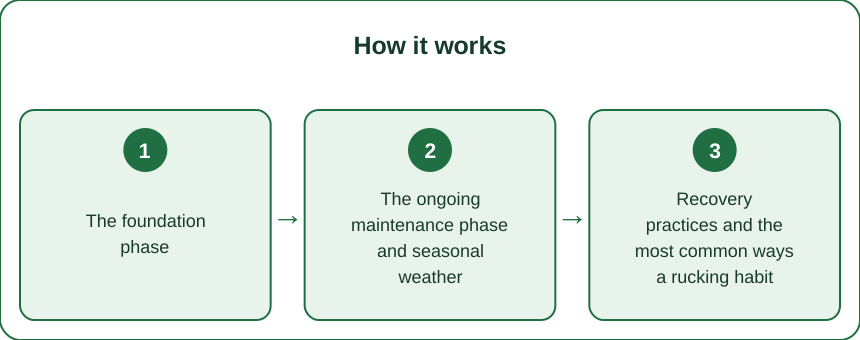
Quick Answer: A full rucking season should progress through three distinct phases — a 4-6 week foundation phase building tolerance to light weight and distance, a 6-8 week progression phase increasing load and duration, and an ongoing maintenance phase that adapts to weather and recovery needs — rather than treating every week the same way from day one.
Most rucking advice covers a single workout well but leaves you guessing about how to structure months of consistent practice.

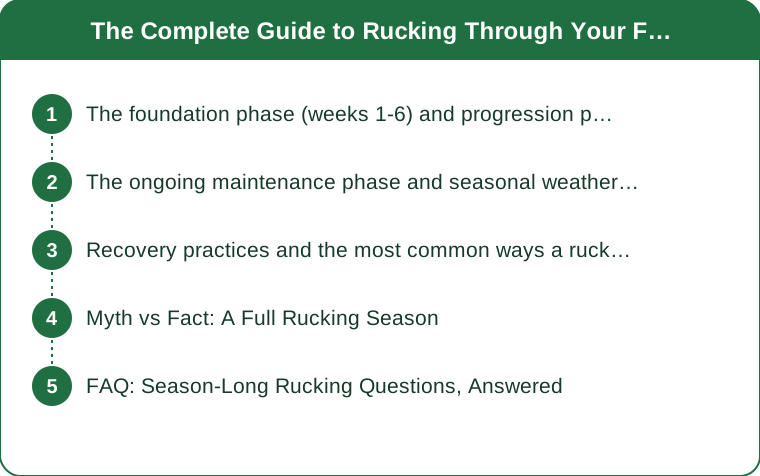
The foundation phase (weeks 1-6) and progression phase (weeks 7-14)
What should the foundation phase actually prioritize?
The foundation phase should prioritize tolerance building over intensity — starting with 10-15% of body weight for 30-45 minute rucks, two to three times a week, focused entirely on comfortable form and consistent completion rather than pushing pace or distance. Rushing this phase is the single most common cause of early shoulder or hip injuries among new ruckers, since connective tissue adapts more slowly than cardiovascular fitness does.
How should weight and duration actually progress through weeks 7-14?
A reasonable progression adds roughly 5% of body weight every two weeks, alongside modest duration increases, rather than large jumps — reaching 20-25% of body weight by the end of this phase is a realistic target for most beginners who started conservatively. Progressing weight and distance simultaneously, rather than maxing out one variable before touching the other, tends to produce steadier, more sustainable gains.
The ongoing maintenance phase and seasonal weather adaptation
What does the ongoing maintenance phase look like once the base is built?
Once a solid base is established, maintenance shifts toward variety and adaptation — mixing terrain, adjusting session length based on weather, and periodically testing yourself with a longer or heavier session rather than constantly progressing every single week. This phase is less about linear progress and more about sustaining the habit through the parts of a season (bad weather, busy stretches) that derail rucking routines most often.
How should rucking adapt specifically through seasonal weather changes?
Hot-weather months call for earlier or later time-of-day sessions, lighter loads, and more frequent hydration breaks, while cold-weather months require layering strategy and a slightly longer warm-up before loading the pack, since cold muscles and connective tissue are more injury-prone under load. Treating every season identically is a common reason rucking routines break down around weather transitions rather than during the workouts themselves.

Recovery practices and the most common ways a rucking habit falls apart
What recovery practices actually matter most for a season-long rucking habit?
Foot care (proper socks, blister prevention) and shoulder/hip mobility work matter disproportionately for rucking specifically, since these are the areas that accumulate the most repetitive stress across a season. Building in one genuinely easy or rest week every 4-6 weeks, rather than only easing up after pain shows up, prevents the kind of accumulated fatigue that leads to a multi-week forced break.
What are the most common reasons a season-long rucking habit falls apart, and how do you plan around them?
The most common derailment points are early over-loading before tissue adaptation catches up, losing motivation during a weather-difficult stretch, and skipping recovery weeks until an injury forces one anyway. Planning conservative early progression, having a lighter indoor or short-route backup plan for bad weather, and scheduling recovery weeks proactively rather than reactively addresses all three before they become a problem.
Myth vs Fact: A Full Rucking Season
Myth: More weight, more often is always better progress. Fact: Connective tissue adapts slower than cardiovascular fitness, and rushing weight progression is the most common injury cause.
Myth: A rucking routine should look the same in July and January. Fact: Weather-adapted adjustments to timing, load, and warm-up are necessary for a routine to survive a full season.
Myth: Recovery weeks are only needed once something already hurts. Fact: Scheduled recovery weeks proactively prevent the accumulated fatigue that leads to injury, rather than reacting to it after the fact.
FAQ: Season-Long Rucking Questions, Answered
How much weight should a complete beginner start with?
Starting around 10% of body weight, or roughly 10-15 pounds for most adults, allows the foundation phase to focus on form and tolerance rather than managing excessive load right away.
How many rest days per week does a rucking-focused routine need?
Most beginner and intermediate rucking schedules work well with 2-3 rucking sessions per week, leaving adequate recovery days between sessions, especially during the foundation phase.
Is it normal for progress to feel slower in the maintenance phase than the earlier phases?
Yes — the maintenance phase intentionally shifts away from constant linear progress toward sustainability, so slower visible progress at that stage is expected, not a sign something’s wrong.
TL;DR:
- A full rucking season moves through foundation, progression, and maintenance phases, not one flat routine
- Rushing weight progression before connective tissue adapts is the most common injury cause
- Weather-specific adjustments to timing, load, and warm-up keep the routine sustainable year-round
- Scheduled recovery weeks, taken proactively, prevent the accumulated fatigue that forces longer breaks
If you’re serious about rucking as a long-term habit, plan the season, not just the next workout — that shift in mindset is what actually gets people through to the other side of a full year.
Keep Reading
This article is for general informational and styling purposes only. Fit, sizing, and product availability may vary.