Why Ruck Weight Needs to Increase Slower Than General Fitness Improves
Rucking gets noticeably easier within a few weeks as general cardiovascular fitness improves, and that ease creates a natural pull to add more weight to the pack right away, but the connective tissue and joints doing the structural work of carrying that load adapt on a considerably slower timeline than the cardiovascular system does.

Why Cardio Fitness Adapts Faster Than Connective Tissue
The mismatch: cardiovascular-capacity-improves-within-a-few-weeks-of-consistent-rucking-while-tendons-ligaments-and-joint-structures-require-months-of-gradual-loading-to-adapt-safely (cardiovascular capacity improving within just a few weeks of consistent rucking, while tendons, ligaments, and the joint structures actually bearing the added load require several months of gradual, progressive loading to adapt safely, per the rucking-beginners-guide logic — cardiovascular-capacity-improving-within-just-a-few-weeks-of-consistent-rucking-while-tendons-ligaments-and-joint-structures-actually-bearing-the-added-load-require-several-months-of-gradual-progressive-loading-to-adapt-safely), and the reframe (two body systems adapting to the same activity on two very different timelines)).

Why That Gap Tempts Early Weight Increases
The temptation: a-ruck-feeling-noticeably-easier-after-a-few-weeks-reads-as-a-signal-that-more-weight-is-ready-to-be-added-even-though-that-ease-reflects-cardio-adaptation-not-joint-readiness (a ruck feeling noticeably easier after just a few weeks reading as a clear signal that more weight is ready to be added, even though that specific ease reflects cardiovascular adaptation and says nothing about whether the joints and connective tissue are actually ready, per the how-heavy-should-your-ruck-be-guide logic — a-ruck-feeling-noticeably-easier-after-just-a-few-weeks-reading-as-a-clear-signal-more-weight-is-ready-even-though-that-ease-reflects-cardiovascular-adaptation-and-says-nothing-about-joint-readiness), and the frame (the wrong system’s readiness being used to greenlight a decision that depends on a different, slower one)).
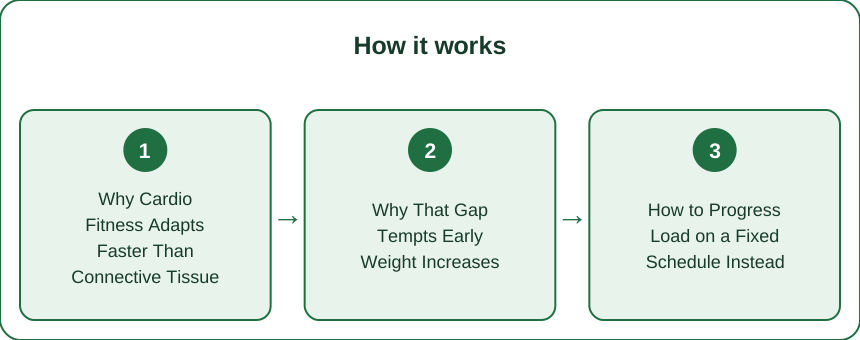
How to Progress Load on a Fixed Schedule Instead
The fix: increase-ruck-weight-on-a-predetermined-schedule-tied-to-connective-tissue-adaptation-timelines-rather-than-to-how-easy-a-given-weight-currently-feels (increasing ruck weight on a predetermined schedule tied specifically to known connective tissue adaptation timelines, rather than to how easy a given weight currently feels during a session, per the ruck-weight-progression-plan logic — increasing-ruck-weight-on-a-predetermined-schedule-tied-specifically-to-known-connective-tissue-adaptation-timelines-rather-than-to-how-easy-a-given-weight-currently-feels-during-a-session), and the frame (scheduling progression around the slower system instead of the faster one).
Cardiovascular capacity improves within just a few weeks of consistent rucking, while tendons, ligaments, and joint structures actually bearing the load require several months of gradual, progressive loading to adapt safely, which means a ruck feeling easier after a few weeks reflects the faster system adapting and says nothing about whether the slower one is ready for more weight. Increasing ruck weight on a predetermined schedule tied to known connective tissue adaptation timelines, rather than to how easy a given weight currently feels, keeps progression paced to the system that actually needs the time.
Keep Reading
This article is for general informational and styling purposes only. Fit, sizing, and product availability may vary.