The Ruck Club: Why Weighted Walking Became a Social Movement
Rucking’s quiet superpower is its pace: hard enough to count, slow enough to talk — which is why ruck clubs multiplied into a genuine social movement. The pack on your back is the membership card; the conversation is the actual product.

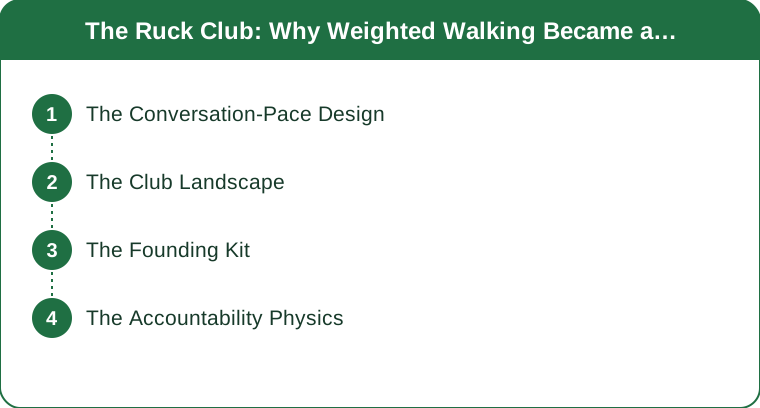
The Conversation-Pace Design
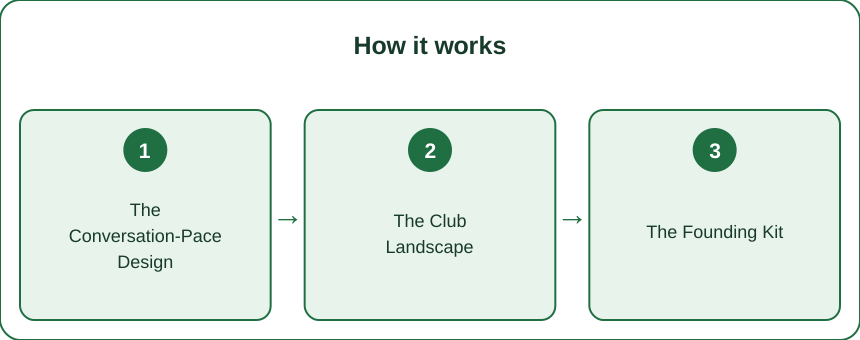
Loaded walking self-limits to talking speed — the whole group works (the weight scales to each body: her 20 pounds and your 12 are the same relative effort) while conversation flows. It is the friendship-formula’s proximity-plus-repetition, carrying weight.
The Club Landscape
Ruck clubs run through fitness communities, veteran-founded organizations and neighborhood startups — search your city plus ‘ruck club’, or the hiking groups that ruck without the branding. Weekly fixed slots dominate (the retention physics again); showing up with any backpack qualifies.

The Founding Kit
No local club: the startup is one friend, two loaded packs, a fixed weekly route and a post-ruck coffee. Post it once; weighted walking’s mild eccentricity markets itself. The clubs that survive share one gene: same time, same trailhead, every week, rain negotiable.
The Accountability Physics
The loaded group walk has attendance rates solo fitness envies: cancelling on people costs more, the pack makes it count, and the coffee epilogue institutionalizes itself immediately. The weight was the excuse to gather — the gathering is what keeps the weight showing up.
Talking pace by design, weekly fixed slots, any backpack as the entry fee. The ruck club movement figured out fitness’s oldest truth from a new angle: people keep appointments with people, especially ones carrying snacks.
Keep Reading
This article is for general informational and styling purposes only. Fit, sizing, and product availability may vary.